


 0
0

Probiotics vs Digestive Enzymes: Key Differences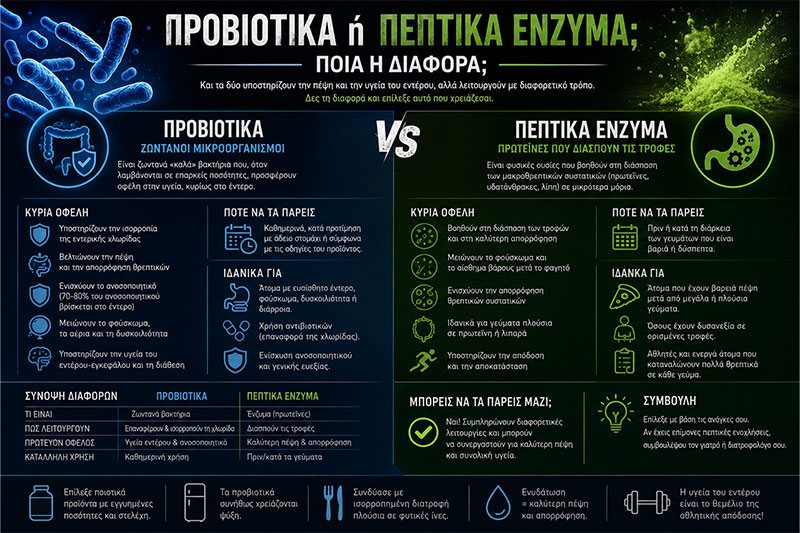 Probiotics and digestive enzymes are frequently grouped together because both are associated with digestive health. However, they are fundamentally different and do not serve the same purpose. Probiotics are live microorganisms that may provide a health benefit when administered in adequate amounts. Digestive enzymes are proteins that break food components into smaller molecules that can be absorbed by the digestive system. A probiotic cannot replace a missing digestive enzyme, while a digestive enzyme does not directly populate or modify the intestinal microbiome in the same way as a probiotic. Relevant products can be found under digestive and gastrointestinal support. What are probiotics?Probiotics are mainly bacteria, although some products contain beneficial yeasts. Their effects can involve interactions with the gut microbiota, suppression of certain unwanted microorganisms, metabolite production and support of the intestinal barrier. Probiotic effects are often strain-specific. Evidence concerning one strain cannot automatically be applied to another species, strain or multi-strain product. What are digestive enzymes?Digestive enzymes assist in breaking down carbohydrates, proteins and fats. Common supplemental enzymes include:
Enzymes act on specific substrates. Lactase, for example, targets lactose but does not digest dietary fat or protein. The main differenceProbiotics primarily target functions associated with the intestinal microbiota. Digestive enzymes act directly on food during digestion. Probiotics are often taken consistently for a defined period. Digestive enzymes generally need to be consumed with the food they are intended to break down. When may probiotics be useful?Antibiotic-associated diarrhoeaA meta-analysis of 42 randomised trials involving 11,305 adults found that co-administering selected probiotics with antibiotics reduced the risk of antibiotic-associated diarrhoea. Benefits varied according to species, dose and baseline risk. This does not mean that every probiotic is appropriate during every course of antibiotics. Irritable bowel syndromeCertain strains or combinations may improve selected IBS symptoms. However, study heterogeneity is high and the certainty of evidence for individual preparations is often low. Probiotics should therefore be selected according to strain-specific evidence rather than total CFU alone. General gut supportThere are no formal recommendations requiring all healthy people to take probiotics. A high CFU count does not by itself demonstrate that a product will provide a meaningful benefit. When may digestive enzymes be useful?Lactose intoleranceLactose intolerance occurs when the small intestine produces insufficient lactase. Symptoms may include gas, bloating, diarrhoea, nausea and abdominal pain after consuming lactose. Supplemental lactase may help selected individuals manage symptoms when consumed with lactose-containing food. Gas after legumesAlpha-galactosidase can break down selected oligosaccharides found in legumes and may reduce intestinal gas in some people. Exocrine pancreatic insufficiencyExocrine pancreatic insufficiency is treated with prescription pancreatic enzyme replacement therapy. These enzymes are taken during meals and snacks to support digestion and nutrient absorption. Over-the-counter digestive-enzyme supplements should not replace prescribed pancreatic enzymes. Functional dyspepsia and meal-related bloatingSmall trials suggest that certain multi-enzyme products may reduce selected symptoms of functional dyspepsia or post-meal bloating. Evidence remains limited because formulations and study methods differ. Probiotics or enzymes for bloating?Bloating can be associated with lactose intolerance, fermentable carbohydrates, constipation, IBS, large meals or an underlying gastrointestinal condition. When bloating occurs predictably after dairy products, lactase is more targeted than a general probiotic. When symptoms follow legumes, alpha-galactosidase may be relevant. A strain-specific probiotic may be considered for selected people with IBS, although results are not guaranteed. Can they be taken together?Probiotics and digestive enzymes can be used within the same programme because their mechanisms differ. However, combining them is only logical when there is a specific reason for each ingredient. A product containing many enzymes and multiple probiotic strains is not automatically more effective. How to read a probiotic labelA detailed probiotic label should identify:
CFU should ideally be guaranteed through the product’s expiry date rather than only at the time of manufacture. How to read a digestive-enzyme labelEnzyme activity is often more informative than enzyme weight in milligrams. Activity can be expressed in FCC or USP units, with different units used for different enzymes. Two products containing the same number of milligrams may therefore provide very different enzymatic activity. TimingDigestive enzymes are generally taken immediately before or with the first portion of a meal so they can mix with the food they are intended to digest. There is no single ideal timing rule for all probiotics. Product instructions, storage conditions and consistent use are usually more important than choosing a universal time of day. Digestive enzymes and glutenCommercial digestive enzymes do not make gluten-containing food safe for people with coeliac disease. A strict gluten-free diet remains the established treatment. Enzyme supplements should not be used to protect against intentional gluten consumption. Side effects and precautionsProbiotics may initially cause mild gas, bloating or changes in bowel habits. Rare infections have occurred in people with severe illness, compromised immune function or other major risk factors. Digestive enzymes may cause nausea, abdominal discomfort, diarrhoea, constipation or allergic reactions. Persistent pain, blood in the stool, unintentional weight loss, repeated vomiting or symptoms of malabsorption require medical evaluation. ConclusionProbiotics and digestive enzymes are different tools rather than interchangeable products. Probiotics primarily target the gut microbiota and should be selected according to strain-specific evidence. Digestive enzymes act directly on food and are most relevant when a specific substrate or enzyme deficiency has been identified. Lactase is more targeted for lactose intolerance, while selected probiotics may be considered for antibiotic-associated diarrhoea or particular IBS symptoms. Frequently asked questionsWhich is better for bloating?It depends on the cause. Lactase may be more appropriate for dairy-related symptoms, while a strain-specific probiotic may be considered for certain IBS symptoms. Can probiotics and digestive enzymes be taken together?Yes, but a combination is not automatically necessary or more effective. Do digestive enzymes improve protein absorption?Proteases assist protein digestion. In healthy people with normal enzyme production, broad-spectrum enzyme supplements have not been shown to substantially increase total protein absorption. Should probiotics be taken permanently?Not necessarily. Duration depends on the strain, purpose and individual response. Are higher CFU counts always better?No. Strain identity and evidence for the intended use are more important than the highest possible CFU count. Can digestive enzymes protect people with coeliac disease from gluten?No. They do not replace a strict gluten-free diet. References
|




(c) toubanaki.gr - All rights reserved - By: Hyper Center -