


 0
0

Taurine: What It Is, Its Role and Scientific Evidence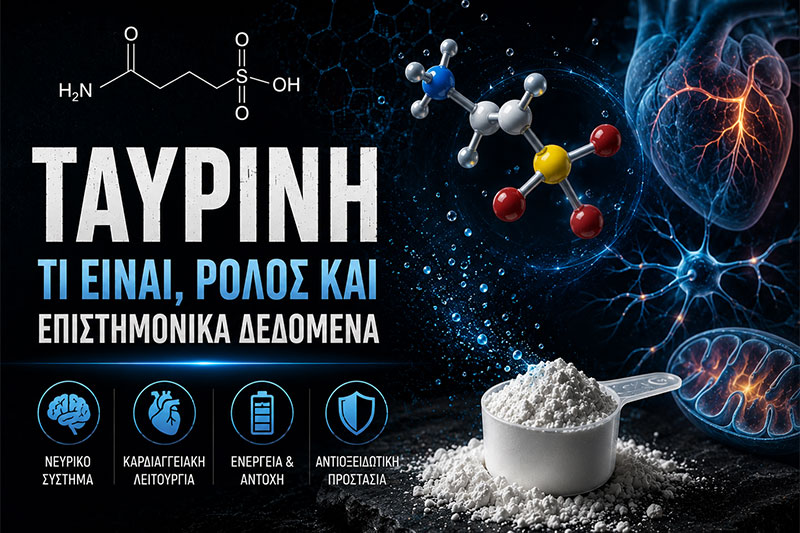 Taurine, or 2-aminoethanesulfonic acid, is often described as an amino acid. More precisely, it is an amino sulfonic acid because it contains a sulfonic acid group rather than a carboxyl group. It is also non-proteinogenic, meaning that the body does not use it as a building block for protein synthesis. The human body can synthesize taurine from the sulfur-containing amino acids cysteine and methionine. Taurine is also obtained through the diet, mainly from fish, seafood and meat, with smaller amounts in some dairy products. Plant foods generally contain very little taurine [2,3]. The scientific literature supports several physiological roles for taurine. However, the fact that a compound is biologically important does not automatically mean that supplementation provides an additional benefit to every healthy person. Physiological necessity and the effectiveness of supplemental intake are separate scientific questions. What does taurine do in the body?Osmoregulation and cell volumeTaurine acts as an organic osmolyte. It helps regulate the balance of water and dissolved substances inside cells and contributes to the maintenance of normal cell volume. This function is especially relevant in tissues with high metabolic or electrical activity [1–4]. Calcium homeostasis and muscle functionIn skeletal and cardiac muscle, taurine is associated with intracellular calcium regulation, ion-channel function and cell-membrane stability. These mechanisms contribute to normal excitation and contraction of muscle cells [1,3]. Nevertheless, taurine's presence in muscle tissue is not, by itself, evidence that a supplement increases muscle mass or physical performance. Nervous system and retinaHigh taurine concentrations occur in the brain and retina. Taurine participates in neuromodulatory and cytoprotective processes and in the regulation of ionic balance [1,2]. These biological functions are extensively researched, but they do not justify claims that supplemental taurine prevents or treats neurological disease. Bile acids and fat digestionIn the liver, taurine conjugates with bile acids and contributes to bile-salt formation. Bile salts support the emulsification, digestion and absorption of dietary fats and fat-soluble vitamins [1,2]. Cytoprotection and oxidative stressTaurine participates in mechanisms associated with mitochondrial function, inflammatory responses and oxidative-stress regulation [2,4]. Describing it simply as a “powerful antioxidant” is an oversimplification: many of its actions are regulatory or indirect and are not identical to the action of a conventional direct free-radical scavenger. What does the scientific evidence show?Scientific reviews provide strong support for taurine's physiological importance in cellular homeostasis, excitable tissues and bile-acid conjugation. Supplementation research, however, includes different populations and outcomes—from exercise-related measures to cardiometabolic markers—and the findings are not uniform. Universal benefit claims are therefore not scientifically justified. Evidence should be interpreted according to the population, study duration, dose, dietary background, baseline health and specific outcome assessed. Mechanistic findings from cell or animal research are valuable for understanding biology, but they do not independently establish a clinical benefit in humans. Is taurine a stimulant?No. Taurine does not stimulate the central nervous system in the same way as caffeine. Its frequent inclusion in energy drinks can cause confusion, but these products commonly contain caffeine, sugars and other ingredients. The effects of an energy drink therefore cannot be attributed to taurine alone. Safety and precautionsIn published human studies, taurine has generally been well tolerated at the amounts and for the durations investigated [3,4]. This does not prove that every amount is safe for unlimited use. People with chronic medical conditions, impaired kidney or liver function, pregnancy or breastfeeding, as well as those taking medication, should consult a physician or another appropriately qualified healthcare professional before using a supplement. A supplement is not a substitute for medical assessment, a balanced diet or prescribed treatment. ConclusionTaurine is a biologically important, non-proteinogenic amino sulfonic compound. It contributes to osmoregulation, calcium balance, cell-membrane function and bile-acid conjugation. It is neither caffeine nor a protein-building amino acid. Although its physiological functions are well established, any benefits from supplementation must be evaluated separately through outcome-specific human research. Frequently asked questions about taurineIs taurine an amino acid?It is commonly grouped with amino acids, but chemically it is an amino sulfonic acid and is not incorporated into proteins. Is taurine a stimulant like caffeine?No. Taurine is not a caffeine-like stimulant. Their presence together in some energy drinks does not mean they have the same physiological action. Does the body produce taurine?Yes. The human body can synthesize taurine from cysteine and methionine and can also obtain it from animal-derived foods. Which foods contain taurine?Fish, seafood and meat are the main dietary sources. Smaller amounts occur in some dairy products, while most plant foods contain very little taurine. Does taurine increase muscle mass?Taurine has physiological functions in muscle tissue, but this does not demonstrate that supplementation independently increases muscle mass. Such a conclusion requires specific evidence from controlled human studies. Does the name “taurine” mean that it comes from bull reproductive material?No. The name reflects the compound's historical isolation from ox bile, not from reproductive material. References
|




(c) toubanaki.gr - All rights reserved - By: Hyper Center -